- Now I Rise (The Conqueror's Saga, #2) by Kiersten White
- One True Loves by Taylor Jenkins Reid
- Bright We Burn (The Conqueror's Saga, #3) by Kiersten White
- 10 Things That Never Happened by Alexis Hall
- In My Dreams I Hold a Knife by Ashley Winstead
- And I Darken (The Conqueror's Saga, #1) by Kiersten White
- The Christmas Tree Farm (Dream Harbor, #3) by Laurie Gilmore
- Piranesi by Susanna Clarke
- Sunrise on the Reaping (The Hunger Games, #0.5) by Suzanne Collins
- Atmosphere by Taylor Jenkins Reid
- I Who Have Never Known Men
- Our Infinite Fates by Lauren Steven
- Witchcraft for Wayward Girls by Grady Hendrix
- All the Water in the World by Eiren Caffall
- Bury Our Bones in the Midnight Soil by V.E. Schwab
- Listen for the Lie by Amy Tintera
- The Favorites by Layne Fargo
- Wild Dark Shore by Charlotte McConaghy
- Firefly Lane by Kristin Hannah
- Dream Count by Chimamanda Ngozi Adichie
- Here We Go Again by Alison Cochrun
- The Familiar by Leigh Bardugo
- Make the Season Bright by Ashley Herring Blake
- Sky Daddy by Kate Folk
- Bunny by Mona Awad
- The Pumpkin Spice Cafe (Dream Harbor, #1) by Laurie Gilmore
- Most Wonderful by Georgia Clark
- The Sirens by Emilia Hart
- The Cinnamon Bun Book Store (Dream Harbor, #2) by Laurie Gilmore
- Spread Me by Sarah Gailey
- Jade City (The Green Bone Saga, #1) by Fonda Lee
- Tender Is the Flesh by Agustina Bazterrica
- Lightfall (The Everlands Trilogy, #1) by Ed Crocker
- Hostage by Clare Mackintosh
- Middle of the Night by Riley Sager
- My Friends by Fredrik Backman
- The Incandescent by Emily Tesh
- A Psalm for the Wild-Built (Monk and Robot, #1) by Becky Chambers
- Truthwitch (The Witchlands, #1) by Susan Dennard
- Survive the Night by Riley Sager
- The Clan of the Cave Bear (Earth's Children, #1) by Jean M. Auel
- Butcher and Blackbird (The Ruinous Love Trilogy, #1) by Brynne Weaver
- The Strawberry Patch Pancake House (Dream Harbor, #4) by Laurie Gilmore
- A Fate Inked in Blood (Saga of the Unfated, #1) by Danielle L. Jensen
- The Tainted Cup by Robert Jackson Bennett
- Fable for the End of the World by Ava Reid
- The Merriest Misters by Timothy Janovsky
- The House Across the Lake by Riley Sager
- The Bones Beneath My Skin by TJ Klune
- Half Wild (The Half Bad Trilogy, #2) by Sally Green
- The Grace Year by Kim Liggett
- The Great Divide by Cristina Henriquez
- The Grace Year by Kim Liggett
- We'll Prescibe You a Cat by Syou Ishida
- Emma by Jane Austen
- Great Big Beautiful Life by Emily Henry
- We Could Be Rats by Emily R. Austin
- The Disappearances by Emily Bain Murphy
- The Listeners by Maggie Stiefvater
- We Have Always Lived in the Castle by Shirley Jackson
- I'm Thinking of Ending Things by Iain Reid
- Blob by Maggie Su
- Half Lost (The Half Bad Trilogy, #3) by Sally Green
- Outlander (Outlander, #1) by Diana Gabaldon
- One Hundred Years of Solitude by Gabriel Garcia Marquez
- Wreck the Halls by Tessa Bailey
- Armored Hours by Stephanie Hansen
- Water Moon by Samantha Sotto Yambao
- Boys with Sharp Teeth by Jenni Howell
- Princess of Air (Elements of Royalty, #1) by Natalie Cammaratta
Thursday, January 1, 2026
ALL THE BOOKS I READ IN 2025 RANKED
Tuesday, December 31, 2024
ALL THE BOOKS I READ IN 2024 RANKED
- Like A Love Story by Abdi Nazemian
- The Invocations by Krystal Sutherland
- Dry by Neal Shusterman and Jarrod Shusterman
- The Sword of Summer (Magnus Chase and the Gods of Asgard, #1) by Rick Riordan
- Legends and Lattes(Legends and Lattes, #1) by Travis Baldree
- The Only One Left by Riley Sager
- Once There Were Wolves by Charlotte McConaghy
- Most Ardently by Gabe Cole Novoa
- The Charm Offensive by Alison Cochrun
- Wolfsong (Green Creek, #1) by TJ Klune
- Then She Was Gone by Lisa Jewell
- Lock Every Door by Riley Sager
- Strange the Dreamer (Strange the Dreamer, #1) by Laini Taylor
- The Nightingale by Kristin Hannah
- Lady Macbeth by Ava Reid
- A Games of Thrones (A Song of Ice and Fire, #1) by George R.R. Martin
- The Last Magician (The Last Magician, #1) by Lisa Maxwell
- The God of the Woods by Liz Moore
- Carrie Soto Is Back by Taylor Jenkins Reid
- The Very Secret Society of Irregular Witches by Sangu Mandanna
- The Pillars of the Earth by Ken Follett
- Everyone One in My Family Has Killed Someone (Ernest Cunningham, #1) by Benjamin Stevenson
- The Help by Kathryn Stockett
- The Lady's Guide to Celestial Mechanics by Olivia Waite
- As Long as the Lemon Trees Grow by Zoulfa Katouh
- Bride by Ali Hazelwood
- Love, Theoretically by Ali Hazelwood
- The Bandit Queens by Parini Shroff
- Kiss Her Once for Me by Alison Cochrun
- The Wicker King by K. Ancrum
- Nettle and Bone by T. Kingfisher
- The Guncle (The Guncle, #1) by Steven Rowley
- Lore Olympus, Vol. 1 by Rachel Smythe
- Lore Olympus, Vol. 2 by Rachel Smythe
- That Time I Got Drunk and Saved A Demon by Kimberly Lemming
- Blessings by Chukwuebuka Ibeh
- Weyward by Emilia Hart
- The Family Upstairs by Lisa Jewell
- Vicious (Villains, #1) by V.E. Schwab
- If the Tides Turns by Rachel Rueckert
- The Ship of the Dead (Magnus Chase and the Gods of Asgard, #3) by Rick Riordan
- A Good Girl's Guide to Murder by Holly Jackson
- Blade of Secrets (Bladesmith, #1) by Tricia Levenseller
- The Women by Kristin Hannah
- Hidden Pictures by Jason Rekulak
- Malibu Rising by Taylor Jenkins Reid
- Half Bad (The Half Bad Trilogy, #1) by Sally Green
- Ravensong (Green Creek, #2) by TJ Klune
- Lore Olympus, Vol. 3 by Rachel Smythe
- The Stars Too Fondly by Emily Hamilton
- A Day of Fallen Night by Samantha Shannon
- I Keep My Exoskeletons to Myself by Marisa Crane
- Vera Wong's Unsolicited Guide for Murderers by Jesse Q. Sutanto
- The Christmas Guest by Peter Swanson
- The Good Sister by Sally Hepworth
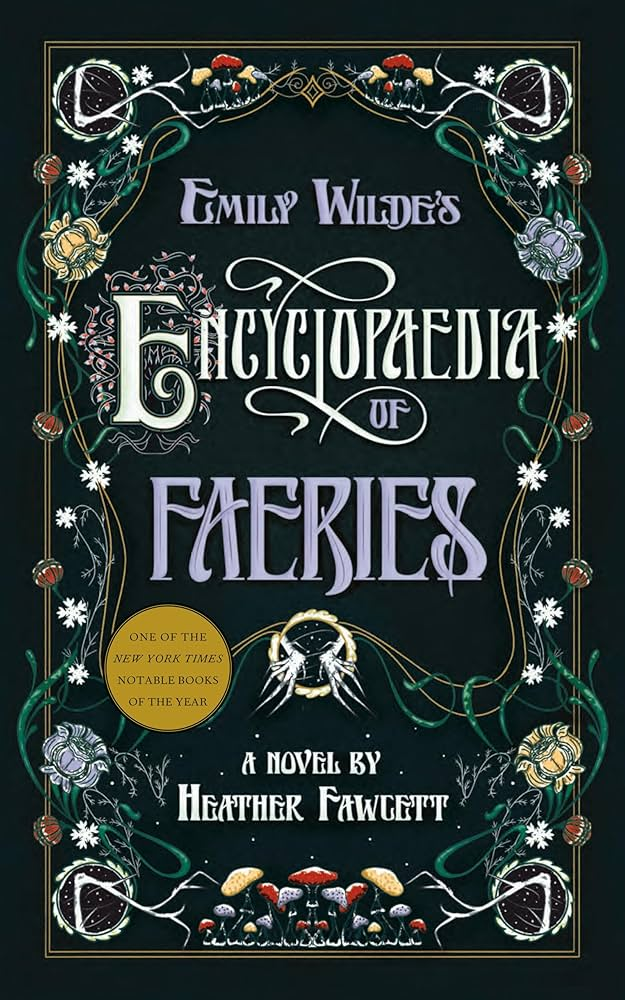
- Emily Wilde's Encyclopedia of Faeries by Heather Fawcett
- Her Majesty's Royal Coven (HMRC, #1) by Juno Dawson
- Funny Story by Emily Henry
- Bloodchild and Other Stories by Octavia E. Butler
- She Gets the Girl by Rachael Lippincott and Alison Derrick
- The Hammer of Thor (Magnus Chase and the Gods of Asgard, #2) by Rick Riordan
- A Shore Thing by Joanna Lowell
- The Eyes Are The Best Part by Monika Kim
- Red Sister (Book of the Ancestor, #1) by Mark Lawrence
- Ruthless Vows (Letters of Enchantment, #2) by Rebecca Ross
- An Ember in the Ashes (An Ember in the Ashes, #1) by Sabaa Tahir
- The Inheritance Games (The Inheritance Games, #1) by Jennifer Lynn Barnes
- Vox by Christina Dalcher
- The Golden Spoon by Jessa Maxwell
- Nothing to See Here by Kevin Wilson
- The Lost Story by Meg Shaffer
- Remarkably Bright Creatures by Shelby Van Pelt
- Anne of Green Gables by L.M. Montgomery
- The Love Hypothesis by Ali Hazelwood
- The Terraformers by Annalee Newitz
- Swan Song by Robert McCammon
- Love on the Brain by Ali Hazelwood
- The Fury by Alex Michaelides
- Dig. by A.S. King
- The Deep Sky by Yume Kitasei
- Castles in Their Bones (Castles in Their Bones, #1) by Laura Sebastian
- Where Sleeping Girls Lie by Faridah Àbíké-Íyímídé
- Lady Tan's Circle of Women by Lisa See
- The Sun and the Star by Rick Riordan and Mark Oshiro
- Half a Soul (Regency Faerie Tales, #1) by Olivia Atwater
- The Foxglove King by Hannah Whitten
- The Tattooist of Auschwitz by Heather Morris
- This Is Where We Talk Things Out by Caitlin Marceau
- Bright Lights, Big Christmas by Mary Kay Andrews
- The Book Haters' Book Club by Gretchen Anthony
- The Pairing by Casey McQuiston
- Cleat Cute by Meryl Wilsner
- The Ferryman by Justin Cronin
- All This Time by Rachael Lippincott and Mikki Daughtry
- A Study in Drowning by Ava Reid
- Invisible Girl by Lisa Jewell
- The House We Grew Up In by Lisa Jewell
- The Gentleman's Gambit (A League of Extraordinary Women, #4) by Evie Dunmore
- Heartsong (Green Creek, #3) by TJ Klune
- The Program (The Program, #1) by Suzanne Young
- Elektra by Jennifer Saint
- The Holiday Swap by Maggie Knox
- The Guncle Abroad (The Guncle, #2) by Steven Rowley
- Graveyard Shift by M.L. Rio
- Faebound (Faebound, #1) by Saara El-Arifi
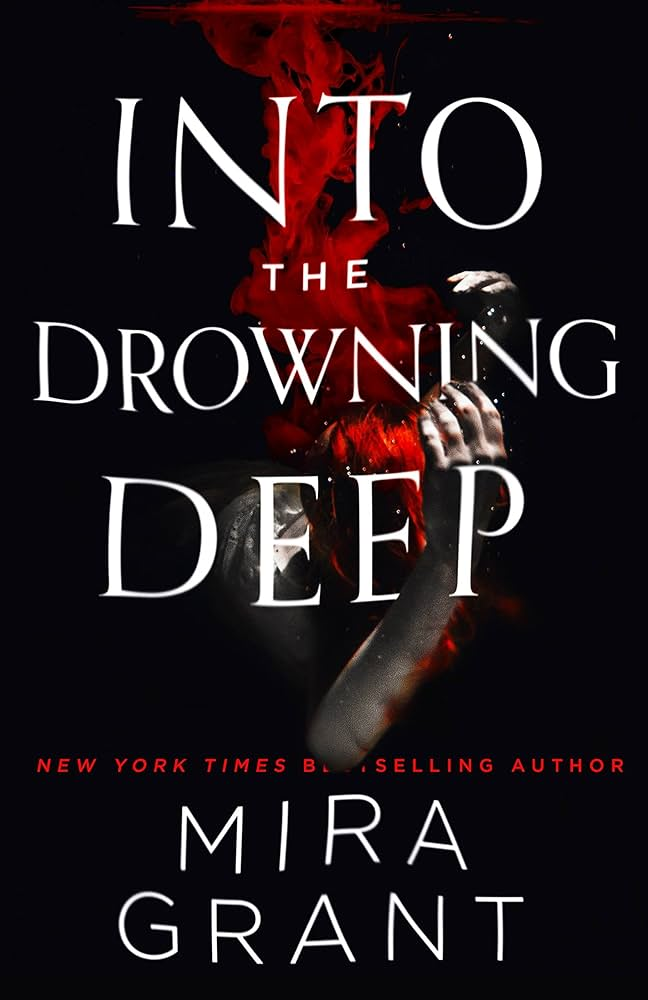
- Into the Drowning Deep by Mira Grant
- Meet Me Under the Mistletoe by Jenny Bayliss
- Let It Snow by John Green, Maureen Johnson, and Lauren Myracle
- The Summer of Broken Rules by K.L. Walther
- Normal People by Sally Rooney
- Atlas Shrugged by Ayn Rand
- The Christmas Murder Game by Alexandra Benedict
- The Pilgrim's Progress by John Bunyan
- A Life on Our Planet by David Attenborough
- The House of Hidden Meanings by RuPaul
- The Demon of Unrest by Erik Larson
- I'm Glad My Mom Died by Jennette McCurdy
- Pages to Fill (Legends and Lattes, #0.5) by Travis Baldree
- The Lord Sorcier (Regency Faerie Tales, #0.5) by Olivia Atwater
Monday, November 18, 2024
Review for "Normal People" by Sally Rooney
This book has been called polarizing: there's the group of people who think it's the most stunning prose ever, and then the group of people that can't get over the fact that it's super boring (me).
★★☆☆☆I cannot get on board with Sally Rooney's characters. Marianne was this Mary Sue who was quirky and beautiful when it served the bare-bones plot, but socially awkward and ugly when that served the plot. Connell was somehow simultaneously the most flavorless character I've ever read and also a terrible person (and he's not supposed to be). The way he continually says something to the effect of "I knew how much power I had over Marianne. I could tell her to do anything and I know she'd do it. I like that feeling" was disgusting. It would be one thing if he started this way and then had some growth but nope he's like that right up to the end. I get that it was supposed to play on Marianne's trauma-induced masochism, but it's not for me. Other than the main two characters, no one stuck out to me except Alan. The one satisfying part of the book was when Connell decked him (as I wanted to in that moment).
I felt like the pacing of the novel was off. It feels like there are decades supposed to be covered but it's really only a few years in their late teens/maybe early twenties. By the end of the book the characters are talking like they're so much older and wiser than they were in the beginning of the book, but they're still only like 20 and hardly wiser. It's hard to write a book with poor pacing when there's no plot to speak of anyway but somehow it was achieved here. I think that's one of those not-for-me things; I just can't read a book that doesn't have a driving force. The (uninteresting) characters are just ambling through life with a lot of narration and thoughts on life and the universe.
I think that last thing is what makes people love the book--they can ignore the lack of plot if the philosophy presented by the characters' inner monologue says something interesting or poetic. I definitely picked up on the philosophizing, but I did not like the messages therein. The big one that sticks out to me is Marianne saying that the perpetrator of bullying/abuse is just as traumatically affected as the victim and for even longer. This did not sit well with me at all. I guess Marianne gets a free pass to assert this as someone who was bullied in school, but it just grossed me out. There were other things that also didn't quite sit right with me but that was the biggest one.
Final verdict: The book is plotless and full of lackluster characters.
Sunday, August 18, 2024
Review for "Like a Love Story" by Abdi Nazemian
Love is our legacy.
★★★★★
This review contains spoilers.
This book was so near perfection I have to gush about it. Empirically, a story that takes place during the AIDS epidemic and is about it is already predisposed to get me emotional, but that doesn't change the fact that I cried three times while reading this. I think this is the first time in 5 years that I've cried while reading and I cried three times. So beautiful. The writing is so eloquent and yet so age appropriate. Every topic explored is thoughtful and thought-provoking.
The characters in this book were certainly flawed, but it only endeared them to me. Art made some decisions, said some things, and felt some feelings that made me uncomfortable at times, but he's 17 and coming from a hard home life. If anything, his temper and passion made him a believable teenager throughout. Plus, his development over time is made clear in the epilogue. The same goes for Reza. I was silently screaming at him to break up with Judy so much, but his fear and inhibitions were palpable. Judy was the most stable character, and I found myself relating so much to her. She had moments of insecurity, but overall she was just an icon and I loved her for it. In addition to loving the fact that we got each of their first-person narrations throughout, their friendship(s) were everything to me. The cross-section between their innocent young friendship paralleled against Stephen watching his lifelong friends die over and over again... I cannot overstate the emotional power of this story.
By the end of the book, I was floored by how satisfied I was with the plot. I thought it was brilliant that we got a good chunk of time experiencing Art and Reza being together, but that they go their separate ways and don't end up together in the end. So many YA romances leave you with the feeling that you're supposed to believe these teenagers in love stay together forever, but this handled their breakup so beautifully and made the whole story more plausible for me. I also love how it did set you up to have expectations about the continuation of their friendship (before the epilogue) by introducing Annabel as the new third member of the friend group. Sure, some of the plot points were messy in ways I didn't like to read about (i.e. Saadi and Judy "hooking up"), but it is for those reasons that plot came across so authentic and transparent to me. I felt like I was actually seeing into these teenagers' lives.
I am truly blown away by this book; my CAWPILE was 10-10-10-10-10-10-9. The 9 for Overall Enjoyment is only not a 10 because of 2 minor complaints. Firstly, I wish we had gotten more of Reza and Art's connection in the beginning of the novel. They kind of have a love-at-first-sight situation, and it's not made better by the fact that they avoid each other after Reza starts dating Judy. If they hung out at any point before Reza and Judy broke up, it would have made more sense to be that they immediately jump into a serious relationship because their chemistry is just so strong. I understand instant physical attraction, but I didn't buy that they would both betray Judy like that unless they had built up a deeper emotional connection in those months.
My second small issue is that the notecards spread throughout the story was such a cute and genius idea and there was just not enough of it. There were over a hundred cards, so I feel like there should have been a notecard break every three chapters (since every chapter rotated to a different perspective of our main three characters). I loved hearing Stephen's "voice"; it made me mourn him that much more in the end. I especially loved that the Love one was in there before we were even introduced to what the cards were. My complaint is just that I wish there had been more than 4 in the entire novel. Both of these complaints I've mentioned had very little impact on my love of this book, however, and I also understand both were probably limited by page count limits.
Final verdict: This is a stunning YA novel that moved me to tears.
Saturday, June 15, 2024
Review for "She Gets The Girl" by Rachael Lippincott and Alyson Derrick
~ and that's how it works, that's how you get the girl ~
This was really cute! I thought the pacing was spot-on and I was really rooting for Alex and Molly to get together. I related a lot to Molly in terms of her awkwardness and desperation to make friends (as well as her view on art museums). Alex was a bit more of a miss to me. I exist in the real world, so I tend to be skeptical of fictional characters that are "effortlessly cool" the way Alex is described/implied to be. I thought the 360 that was done in her relationship with Natalie was excellent, as evidenced by my feelings about the two of them in the beginning versus the end. In the first few chapters, I could not stand Alex. I found her so self-absorbed and stuck-up, ESPECIALLY when she pulled that stunt in Never Have I Ever. She did grow on me throughout the book as you learn her background, fears, and insecurities. Seeing that vulnerability was essential to her redemption by the end. It also helps that Natalie turned out to be so awful, so we as the reader can see how much of a skewed perspective we had of the situation in the beginning.
If I had to nit-pick at this, which I do because I didn't give it a full five stars, I would say I just didn't feel a big emotional hit from the book. As I mentioned, I related to Molly's fears and struggles a lot, but I felt like they did not have a satisfying end. She has this blow-up fight with her mom which is never satisfyingly resolved; it's just a quick "love you" and then it moves on back to her romance storyline. I was especially put off by how mean she was to her mom. I guess I was just disappointed because I expected her to be scared and anxious but never malicious. I think if, instead of the fight, it had been a breaking down moment where she says all her worries and fears and her mom was able to listen and then console her, I would have liked the book/especially the ending more.
Final verdict: It's sapphic, it's cute, read it!!
Wednesday, June 12, 2024
Review for "Most Ardently" by Gabe Cole Novoa
I finished this several days ago and I'm still thinking about it!
I am not actually a huge fan of Pride and Prejudice; in general, I just think it's overrated and not worth the hype. But a mlm featuring a trans character version of it? I ate it up. I found Oliver extremely sympathetic, and I was surprised by how much I liked Darcy. (One of the overrated aspects of the original is definitely Darcy as a male love interest; he is just so pompous and unlikable.) I loved how in this retelling he was this reserved bookworm who just wanted to support Oliver. I thought his aversion to women made sense in this story, whereas in the original he's just an exceptional misogynist. Beyond their individual characters, I felt they had chemistry together and I was definitely rooting for Oliver to finally come out to Darcy and for them to get together.
One thing that's tricky with a retelling is that the author doesn't really get to take credit for the plot since its bones will always be related to a previous work. Depending on the context of the retelling, the plot might get more or less attributed to the author. This book had a particular challenge because the time, place, and central progression of the story were all the same as the original. Hence, the author has a burden of making this book exceptional through the writing, atmosphere, and characterization. I felt this retelling, though having a similar plot to the original story, far exceeded its predecessor in terms of writing style and the development of the story. Just like in the original, Wickham and Collins were extremely hateable and the conflict was logical and effective; both of these aspects translated well from the original story to this concept. This story just lends itself really well to Elizabeth (in the original) actually being a trans character because to me Oliver's fear of being a wife made perfect sense in a way I didn't really get with Elizabeth in the original.
It's strange to ponder the vibe of this book because to me it had such a cozy, uplifting feeling to it even though Oliver spends much of the book afraid and/or misidentified. Part of me knew this would have a happy ending, both regarding the romance and Oliver's coming out to his family, so I think that allowed me to feel like it's cozy instead of being stressed out while reading. That being said, I loved how accepting everyone ended up being. The characterization of Mrs. Bennett was perfect because she was still as insufferable as she was in the original story; however, her arc of accepting Oliver by the end of the novel was somewhat redeeming for her and I enjoyed it. I feel like people might question the historical plausibility of this total acceptance, but I'm able to suspend my disbelief because this is the story I want and how I wish it would go in any time period.
Final verdict: This is a brilliant retelling of Pride and Prejudice, improving upon what is lacking in the original; plus, it's gay!
Wednesday, May 22, 2024
Review for "Lock Every Door" by Riley Sager
This was so close to hitting that 5 stars (its CAWPILE is 8.52 and I count >8.59 as 5 stars) but the more I ruminated on this, the more issues I had with the logic of it, so I think my star withholding is fair.
★★★★☆
Let's first go over the reasons I enjoyed this quite a bit. While it took me about 50% to warm up to the characters and the story, by the time I got to that halfway mark I was devouring this. The creepiness of the Bartholomew and the atmosphere created because of it, the connections between the characters, and the imploring feeling of I have to find out what happens next right now!! made this a very quick and engaging read. Jules wasn't my favorite thriller protagonist I've ever read, but she was all right. I really appreciated her background and how her traumatic past played into the decisions she made in the story. The background on her parents was horrific, if not completely original. I was surprised to find I was quite happy with the fact that Jane's disappearance did not factor into the story at all. I thought that at the last minute Jules would find a newspaper clipping that had one of Leslie's ads tucked into the pages of Jane's copy of Heart of a Dreamer. While I would have been okay with that too, I feel like keeping Jane out of the Bartholomew mystery kept the story more plausible because it would be too coincidental and didn't fit the M.O. (i.e. only choosing candidates with no family).
I will say I saw the other reveal that Nick and Leslie were mainly behind the disappearances and that Nick was the first doctor's great-grandson very early on. It almost seemed like the author didn't intend for it to be a twist but just a fact, because the breadcrumbs around it were so glaringly obvious. Other than that I was really fond of the side characters. Ingrid, Greta, and Dylan all played their parts well and kept me engaged in the story even when Jules was annoying me.
I try not to nit-pick thriller logic because I'm just there to have a good time and to be honest there has to be some suspension of disbelief for any story you read. That being said, I must comment on the fact that Jules has apparently never heard of a digital copy of a photo (this having been written in 2019) which stuck out as odd to me. More importantly, I know this is rather esoteric but the whole premise of the human organ black market concept was not plausible. Full disclaimer: I am a medical laboratory scientist so I deal with patient testing daily. In truth, it's not possible to have a small network of organ transplants because the likelihood of finding a match is so rare (this is why most people who need an organ like a kidney or partial liver look to family members, because the probability of finding a match there is much higher). Being a match for an organ is considerably different than blood donation; instead of just a blood type you have to do Human Leukocyte Antigen testing which uses an immense amount of sample and time. There's a point where Greta says Ingrid was supposed to give her a kidney but she disappeared and Jules was "also a match" so they used her. I don't know what they mean by "match" because matching organs is an extremely extensive process that could not be done in the amount of time in the book. I also assume they used the blood from Jules's fall for testing and it is completely ludicrous that a smudge of dried blood on a piece of gauze would be used for HLA testing. So even if they had had the time, sample, and resources to HLA match, the math doesn't make sense for Jules and Ingrid to both be a match to Greta. The coincidence is just too much. To that point, how did they happen to find any matches with just random people off the street? Insanity. I understand that most of the audience does not have this kind of medical background so the consequence of this oversight is negligible, but if you're going to write about a subject you have little background on, you should do the research necessary so that people who do have that background can't call you on how wrong it's written. Again, perhaps that's nit-picky and definitely it's not a widespread complaint, but the more I pondered the book the more whackadoodle the basis of the plot seemed. Still... I enjoyed the reveal that the Satanistic cult was actually a human organ black market for rich people, so even with all that said it only slightly diminished my overall feelings on the novel.
Final verdict: This is an engaging thriller with a satisfying reveal.
Tuesday, May 21, 2024
Review for "Remarkably Bright Creatures" by Shelby Van Pelt
I'm shocked this is rated as highly as it is. I gave it four stars so obviously I thought it was great, but I can't believe people are acting like this is the new A Man Called Ove or Eleanor Oliphant Is Completely Fine because it does not touch those masterpieces. This was about 3.5 stars (curse you GR for not having half-stars, in this day and age), which I think was fair considering how polar my feelings were. I loved Marcellus and Ethan. Tova was also a bright spot, but I do have to mention the Tova-knows-nothing-about-technology thing was pretty heavy-handed.
★★★★☆
Some of the logic was not great. The entire T-shirt fiasco was ridiculous. No one stores precious items under the sink (no matter what it is), and no one uses a T-shirt to sop up wine. It was just silly and took me out of the story. I thought the relations between everyone was cute, but I wish it hadn't taken so long for Cameron to realize Simon isn't his father. That just drug on. Speaking of...
Now for the rant: Cameron. Cameron. I don't understand how the author expected anyone to excuse Cameron's entire personality because of the other characters in the book. He was just so awful. I thought this was intentionally done to show his growth throughout the story and really give him an arc but he was so terrible all the way through the end of the novel. Not just being entitled and unmotivated (he and his aunt both swear he's soooo smart but like where??), but his immaturity was unmatched. This was supposed to be a 30-year-old man, and he's making lewd comments about women's bodies/sexual activity? I believe that such men exist but I do not believe I will ever support such a man as being a tolerable protagonist in a novel. Cameron was really just such a dark spot for the novel and I wish he had not existed or been way better so I could have enjoyed it fully.
Also, based on the way it's pitched, I thought the octopus would be in this more :/ he was only like 5% of the story.
Saturday, April 27, 2024
Review for Bride by Ali Hazelwood
Ali Hazelwood writes almost exclusively about women in STEM finding romance, yet I, a woman in STEM who has yet to find romance, rated her Vampire x Werewolf steamy romance higher than any of those. I don't know what I can say for myself.
★★★★☆
When I finished Bride, I felt like it was a solid paranormal romance story. As the hours ticked on though, my brain would be like "let's go read our book" and then I would feel disappointed that I had actually finished said book. My enjoyment and excitement to read was higher than I even realized as I was reading it. So let's break that down.
*Spoilers ahead*
Firstly, I am a huge fan of soft fantasy/paranormal worlds. This book is set in the real world, containing all our normal geography and cities, but it also happens to have vampyres and werewolves who live in their own territories in this world. It gave me the same vibe as the Dark Olympus series (which I still can't really tell if it's supposed to take place on modern Earth or not). This one was very clear-cut: it's our world, but with a few additions. While doubtless some people find it lazy, I personally love this kind of fantasy world and I wish more paranormal and fantasy books would do it this way.* It saves the author the hassle of intensive world building and the reader the hassle of understanding said created world. The atmosphere and world were already to my taste.
The characters grew on me throughout the novel. At first I was put off by Misery being Ali's typical witty Mary Sue type, but I actually found I liked it in the context of such serious and at times morose surroundings. I find myself again wishing we got a dual perspective because I feel like we would have gotten so much more out of Lowe if we had gotten more of him besides a sentence or two at the beginning of each chapter. Other than our two MCs, I was fond of a lot of the characters. I loved seeing how Owen grew through the book; you could tell his personality was limited and then improved by Misery's increasing estimation of him. I quite liked the dynamic between Misery and Ana and between Misery and Alex. I will say it was easy to tell that Mick was the traitor (due to the vampyres having his son). He was just too nice to not have a betrayal arc. However, there was a different, better twist, so I was fine with this one being predictable. Overall I liked the MCs and the side characters and their interactions; if we get a sequel I hope we get to see some of those relationships grow.
The romance was not particularly original if you're familiar with Ali's work--it repeats several tropes that are present in all three of her other major works. The most notable are the FMC hinting that she thinks she's asexual until she meets "him" (such a harmful way of thinking to spread to people), and the FMC and MMC going on a trip together (in every other novel is was some science conference; in this one it was the meeting with Emery). Overall I still have to say I enjoyed the romance because of the sort of primal element that was brought in due to the two MCs being non-human species. Werewolf romances will always hook me. (Although what was up with the whole knot thing? Is that a normal part of werewolf lore? I found it weird and gross, so maybe slightly less of the animal/werewolf aspect in the romance would have been okay...) I will say it was a little weak as far as enemies-to-lovers go; although they are from supposedly rival species, they didn't seem to even dislike each other in the beginning. This is pretty on-par with Ali's style--it's low-stakes but still pretty satisfying because the romance is relatively slow-burn.
The plot was another area I feel like this book stood out. I was thoroughly enjoying the mystery aspect of it, and I definitely didn't guess that twist at the end that Serena was also a half-were. I usually find the driving plot in Ali's books takes a backseat to the budding romance and internal monologuing in the FMC's narration. While there was still plenty of those elements in this book, I found they were better balanced by the suspense and intrigue of the plot.
Final verdict: This is a unique paranormal romance with an entertaining plot and cast of characters, only slightly diminished by its lack of originality when compared with the author's other novels.
Ali Hazelwood books ranked:
1. Bride
2. Love, Theoretically
3. The Love Hypothesis
4. Love on the Brain
*Update: Urban fantasy. The term I was looking for was urban fantasy. Lol.
Thursday, April 4, 2024
Review for "The Inheritance Games" by Jennifer Lynn Barnes
I would recommend this book with full confidence to people who loved Truly, Devious. I think it has such a similar tone, goal, and character setup. Unfortunately, many of the same things I didn't love about Truly, Devious I also was not a fan of in this book.
★★★☆☆The Hawthorne brothers felt so forced. Their personalities were completely stale, yet everyone insists they are so mysterious and so captivating (no). I couldn't really figure out why certain characters were in the book (Thea, Nash); it just seemed like the author wanted to fill out the space in the novel more. I absolutely hated the romantic relationship between Stevie and David in the Truly, Devious books and similarly I hated the fact that there was a romance between Avery and not one but TWO of the Hawthorne boys. And it was the two with personalities of cardboard! It felt weird and not natural and gross.
What this book really has going for it is the Hawthorne House. A mysterious mansion with secret doors and passages, built and kept by a puzzle-loving old man? I'm hooked. I just wish the book had gone more into that and less of Avery's "wahhh I don't belong in this rich person world" monologues. I also must just point out how annoying the repetition in this book was. If I never read the words "the glass ballerina--or the knife" again it will still be too soon. Same thing with the line about "Even if you thought you'd manipulated him, I guarantee he was the one who was manipulating you". Completely distracting from the story.
Final verdict: A tragic case of the concept was better than the execution.
CAWPILE: 6 - 7 - 6 - 7.5 - 8 - 7 - 7
Monday, April 1, 2024
Review for "Castles in Their Bones"
Daphne understands, suddenly, exactly what she is--not a girl, not a princess, not a spy or a saboteur. She is a poison, brewed and distilled and fermented over 16 years, crafted by her mother to bring ruination to whomever she touches. Poison is a woman's weapon, after all, and here she is, a weapon of a woman.
★★★☆☆I enjoyed this overall. I had a hard time staying completely engaged because of the shifting viewpoints, but that was unavoidable with the plot being what it is. I think if I had been attached to any of the relationships it would have been better. I really only cared about Sophronia and Violie's friendship. I could not have cared less about Beatriz and Nicolo (although I did appreciate her friendship with Pasquale and I wish we'd gotten to see more of Pasquale with Ambrose). I was so ready to ship Daphne and Bairre but alas their slow burn was such a slow burn that it was a no burn and we really got no payoff by the end of the book. I'm sure the second book will delve more into the relationships, but I am really not that motivated to continue the series.
I found it slightly hard to believe the last chapter (Margaraux's). She had been this untouchable enigma for the entire book, but I didn't really get a sense of her coldness. It made the prophecy that was revealed at the end seem somewhat out of the blue and I just couldn't get on board with Margaraux's character/motivations. I was also slightly uncomfortable with the princesses' ages. They are supposed to be 16 (just turned), but they talk so much about alcohol ("If she makes it through this without being tied to a stake, she'll celebrate with an entire bottle of wine" (p. 191)), marriage consummation, and being trained for years on how to seduce considerably older men ("This is what she was raised for--her beauty is supposed to be her best asset" (p. 223)). (The latter is especially befuddling because they later state they've only kissed like 3 boys before.) I just think those comments would have sat better with me if they had been 18 or 20.
Final verdict: The book is readable and entertaining but lacks logic and fleshed-out relationships.
CAWPILE: 6 - 7 - 7 - 8 - 6.5 - 6 - 7
Tuesday, March 19, 2024
Review for "If the Tide Turns" by Rachel Rueckert
I received a copy of this book from a Goodreads giveaway.
★★★★☆
This was a solid debut historical fiction book! It was obvious not only that the author did an immense amount of research, but that she is truly passionate about the people she's writing about here. I appreciated that she included the Cast of Characters in the beginning so that we could know what characters are inspired by real historical figures and which were completely fictional. The author's note was very insightful into the research that went into the novel and the enthusiasm the author has for the time period and these characters specifically.
I was enraptured by the story most of the way through. I am generally not a fan of dual POVs where they are recounting events completely separate from one another, but in this case it made sense because it was a lost love/second chance romance story; also, it was based on true events so I can't dock the author for writing it this way. I was extremely intrigued by Sam's pirate escapades, including the Articles and just in general the way the society on his pirate fleet was so far progressed beyond that of the land dwellers' of his time period. This is definitely a part where I appreciated the author's note because it was pleasantly surprising to find out that this part of the book was inspired by the truth. I was also very fascinated by Sam's consistent reluctance to piracy; this combined with his self-proclaimed sense of pride made him a more complicated and thus likeable and believable character to me.
That brings us into the characterization. I found both our protagonists to be compelling characters. I won't go into the "they're too modern for this time period" viewpoint because their progressive viewpoints are what I like about them. To me it is very entertaining to read characters who notice injustice and speak out against it, even if it makes them stand out in a bad way. I did think there was room for improvement when it came to introducing the characters; there was a bit of "telling not showing" in the beginning which was unnecessary because the showing part did come naturally and we could have just done without the telling. At one point, Sam says "I know I'm prideful" or something like that, and I would eventually see this fact without needing to be told it from the outset. The same is true of Maria's characterization. I loved her haughtiness and resilience, but I felt her initial introduction was a bit too heavy handed on these facts.
I wanted to talk about the telling-not-showing thing in the characters section so that I could reserve my paragraph on the writing for praise. I really liked how this was written. The internal monologues, the characters' actions and thoughts, it was all very engaging. There were several moments that very lightly referenced Taylor Swift lyrics (in the inspired-by way, not the plagiarism way) and sure enough the author thanked T-Swift in the acknowledgements. I hope the author is happy to know I had "Love Story" playing through my head the entire time I read this book! The influence definitely shows in the best way because I found this tale almost lyrical in its prose while not sacrificing the agency of the plot to do so.
Final verdict: While there is some slight opportunity for improvement regarding the characterization, this is a very solid debut historical fiction with an engaging plot, earnest characters, and beautiful writing.
Saturday, March 16, 2024
Review for "Vera Wong's Unsolicited Advice for Murderers" by Jessie Q. Sutanto
This review is sectioned because I read this as part of a book club and we discussed the first half of the book first and then the second half.
★★★★☆
3/14/2024 (ch. 1-14)
I just finished chapter 14, so I'm about a third of the way through. I'm writing my chapters 1-20 review now because there's chance I'll forget to do it when chapter 20 rolls around and will just keep blazing through the book. I am finding it cute and intriguing so far!
I think Vera Wong is a very charming main character. Our introduction to her was comprehensive yet efficient, which I really appreciated. We got into the meat of the story very quickly, and overall I just really like the pacing. We are able to get glimpses of the characters' histories without straying too far from the main storyline. I didn't know this book would have multiple POVs, and as much as I do like all the characters so far, I kind of wish we got more of Vera. I feel like she should have a more dominating presence in the book considering she's its namesake. I also want to reiterate something I've heard other people say: canonically, Vera should have been older than 60. She reads as if she's at least in her 70's, and hearing this supposedly 60-year-old woman described as so elderly/aloof did not compute.
My disclaimer for this next part is that, as someone who's white, I don't know how much right I have to comment on this topic. At some points in the book I have questioned the stereotypes that Vera has been reinforcing. It is not constant, but there are lines or moments where my brain kind of cringes because Vera has done, said, or thought something that is so prevalent in harmful stereotyping of Chinese immigrant parents. I won't comment on whether or not they might be "true stereotypes"; I'm just putting my trust in the fact that the author is more knowledgeable on what is acceptable on this topic than I am. (Also, I've been listening to the audiobook, and it's possible the narrator's inflections have also been contributing to this.)
As for theories, it seems that Sana and Riki both harbor guilt over what happened to Marshall. It's likely that neither of them is completely responsible for his death but that they both did/said something to indirectly cause Marshall to OD. I also can already see the cozy ending: Sana, Riki, Julia, and Oliver end up being regulars at the teashop and help Vera revitalize it to become more successful than ever. I also expect Vera to reconcile with her son. Since he's a lawyer, maybe he gets involved with Vera's investigation, especially because it has already been hinted that he disapproves of it.
But also--what is on the flash drive???
Overall, the cozy tone of this book is very good. I love that it's low-stakes even though it's a murder--likely due to the fact that Marshall was such a terrible person that no one really feels bad that he's gone. There are moments that Vera says something (in her internal monologue) that gives my heart a squeeze, usually about her son or late husband and how lonely she feels. I definitely foresee this being a very heartwarming story by the conclusion, and I can't wait to see all the crazy shenanigans Vera gets into before then.
Update 3/20/2024 (ch. 15-end)
This mystery was very cute. In order to build all the character arcs and relationships, we did lose a little bit of the mystery focus; it went off topic from the murder a bit more than I was anticipating. I didn't mind this though because I did like the characters and hearing their backstories.
If the mystery was a bit more convoluted, I could have forgiven the lack of focus on it a bit more. The answer seemed a bit too simple and the buildup was slightly anticlimactic. For example, the amount of suspense created around the flash drive/laptop caused the plot to feel really flat when its contents are finally revealed. Again, I mostly forgive this because I appreciated the off-topic parts that had to do with the "suspects", I just think this could have been really excellent if it had achieved both good character building AND a fantastic murder mystery simultaneously.
In my previous (ch. 1-20) review, I said something about predicting the characters were guilty of confronting/hurting Marshall but that none of them did it and it was probably an OD. I realized when I picked up the book again that by that point we had already found out about the bird dander being the cause of death, so obviously that was a silly prediction which I would like to retract. It did cross my mind to be suspicious of Alex because, as others have mentioned, Vera spoke so highly of him which is suspicious in its own right. However, I didn't put it together that he was Marshall and Oliver's father. In hindsight it seems so obvious (I even went back and listened to chapter 2 where Alex is telling Vera about his sons and laughed at my past self for not putting it together), but I do think that connection was very clever. (Disclaimer: I am not a person that looks for twists in thrillers; I like to be surprised so I don't over-scrutinize as I'm reading. Someone who pays more attention might have guessed the twist, but as a casual reader I did not.)
I did accurately predict that the team would come together and get Vera Wang's World Famous Tea up and running, although admittedly it went a slightly different direction than I anticipated. I didn't count on everyone fixing up the shop (the furniture, mural, etc.) and then Julia bringing her new social media following into it but it worked because it lent credibility to the trope. I will say I was surprised Vera didn't have more of a reconciliation with her son (as it was in my prediction that they would have a big makeup at the end), but maybe it was more plausible that they didn't considering just how strained their relationship was.
The closest thing I can compare this book to that I've read is Finlay Donovan Is Killing It, but the type of story is slightly different. In contrast to Finlay Donovan, Vera Wong's enthusiasm for this murder was unique and funny to read; somehow her commitment to believing it was a homicide came off as cute instead of pathological.
I would read this author again; reading this got me interested to read Dial A for Aunties just because I already knew people talked about it a lot and I kind of want to see what the big deal is, and if people think this one or that one is the better of the author's books. I also just want to get more into the cozy mystery genre; maybe if I do I can better judge this book in comparison to others.
Final verdict: It's cute and heartwarming, and only lacking a bit in the mystery aspect.
Wednesday, March 13, 2024
Review for "As Long as the Lemon Trees Grow" by Zoulfa Katouh

Apart from the romance, I just really enjoyed the plot of this. The struggle to secure a way out of Syria along with Salama and Kenan's desire to fight and protect the country was stressful but really well done. I also was a big fan of the Layla storyline/twist; it was heartrending in the best and worst ways since I didn't see it coming but I had grown to really appreciate Salama and Layla's friendship. It very much reminded me of Adrift: Seventy-Six Days Lost at Sea so maybe it's not the most original twist, but I still liked it. Side note on the plot: As morbid as this is going to sound, I almost would have liked for the characters to not survive and it be like Salama is telling her story from heaven, just because I've never seen that done in this kind of story and it would have been even more impactful. That being said, because I was rooting for the characters so much, I did feel a large sense of relief when they all had a happy ending.
I don't want to understate the power of this novel; I think it is beautiful and important and sheds light on a situation that many of us were aware of but knew nothing about. The book has a very serious goal and purpose and I think it achieves both effectively. The reason this ends up as a 4/5 stars instead of a full 5 for me, despite my earlier gushing, is because I just think the writing is "not for me". Most of the time it was good/okay and I really appreciated the story, but there was quite a bit of purple prose in here that drew me out of the story. The plot is already so grim that we really didn't need so much flourishing in the narrative, especially when most of it was just in Salama's internal monologue. It really came off at times as spoken word poetry which is just not what I'm looking for in a novel. This may have been exacerbated by the audiobook narrator's reading style, but in general I found the writing to be a bit cringey at times, particularly in the first half of the novel when I was still familiarizing myself with the story and characters.
Final verdict: This hauntingly beautiful story is only somewhat diminished by excessive writing flourish.
Sunday, March 10, 2024
Review for "Into the Drowning Deep" by Mira Grant
Because of how awkward the writing (mainly the dialogue) is in this, I had a really hard time getting into the story. On top of the melodramatic/stilted dialogue, there were so many entire paragraphs in parantheses. I suppose this was done to indicate that it was background on an recently mentioned topic, but girl it just wasn't necessary, and it was annoying. Until the creatures started invading the ship, I just was not motivated to open this book and read. While I didn't hate any of the characters (other than Tory's ex, I don't even remember his name now), I just found their motivations unreasonable or otherwise bemusing. I could not figure out Theo's entire characterization at all. I liked the Olivia x Tory dynamic, but I wish we had gotten more of it, in some kind of epilogue maybe. Speaking of which, while I wouldn't be a proponent of this book being any longer than it is, why was the ending so abrupt? It was like "they were saved, yay, the end". A lot of aspects of the book did not make sense to me and honestly would make me think the book was written by an inexperienced author, which of course I know it wasn't.
I will say: once that plot picked up, I did kind of get into the story. I was able to very easily coast through the last 200 pages or so. By that point I had figured out how to tune out the bad writing in order to just enjoy what was happening. While I thought a Sci-Fi/Horror book would be scarier than this, the book does a good job at blending science and suspense. I will commend the author for how much research probably went into learning about several different fields of marine biology in order to write this.
Side note: Why is the book called "Into" the Drowning Deep? Literally only 1 person goes into the water and is immediately killed (2 people, if you count Tory's very late and brief encounter, but still). It'd be more aptly titled "On Top of" the Drowning Deep, but I guess that doesn't have the same ring to it.
Final verdict: The writing is bad, but the book is not completely unreadable.
Wednesday, March 6, 2024
Emily Wilde's Encyclopaedia of Faeries
★★★★☆
What I liked: The vibes are immaculate, the overall feel of the book is very cozy as promised. The book manages to feels low-stakes the majority of the time even when the plot is primarily revolving around abducted children and evil enchantments. I found Emily to be a funny little narrator. She was quirky without trying too hard to be different, and her scholarliness was part of the charm in her writing style. I liked several aspects of Wendell; I thought it was interesting how he was constantly aware of and manipulating people's view of him while simultaneously being pretty indifferent to their wellbeing. I found him very tame given the way faeries were described, but we can chalk that up to his having been exiled from the faerie world for so long.
I think I struggled a bit with the relationships. I felt no romantic chemistry between Wendell and Emily, so for their friendship to take that turn felt very odd to me. Surely that is part of the charm for most people: a curmudgeon and a Faerie fall in love. But for me I didn't buy into them being in love. Prior to Wendell announcing his love for her and proposing marriage, I would've have sworn there would be no romance in this novel. I also felt that the relationships between Emily/Wendell and the townspeople could have been better; I was not believing that they would all march into faerie lands, risking their own lives, for Emily. Perhaps if the book had been padded with 50-100 pages more development both of these relationship issues would have been less apparent.
This is a very minor critique but I simply must comment on the hair. Every other page hair was mentioned. Whether it was Emily's hair which is ALWAYS falling out of her messy bun, even with faerie magic enchanting it, or Wendell's hair which is always so golden and perfect that Emily just wishes she could run her fingers through it, I feel that I have been thoroughly informed on the characters' hair.
Final verdict: It's cute and cozy and only lacks in the characters' relationship development.
Wednesday, February 28, 2024
Review for "Love on the Brain" by Ali Hazelwood
Look look look… I am fully aware that Ali Hazelwood’s bibliography is completely formulaic (having only read Love, Theoretically, The Love Hypothesis, and this one in that order) but jaysus chrahst if I don’t eat it up every time...
★★★☆☆I honestly don't think I enjoyed this any less than The Love Hypothesis or Love, Theoretically, so it's perplexing that this one ends up with a full star rating lower than the other two. I must attribute it to the fact that the plotline is getting tedious; there's only so many times you can write the same exact story in slightly different contexts before your readership gets bored. And maybe "bored" is an incorrect statement, because as I mentioned I did enjoy this. I think it's just coming off as unoriginal, owing to the fact that I've read all three of these books in a six-week timespan. I just find that all the FMCs are identical: "I'm quirky and quippy but undervalue myself". The main antagonists of the story are all comically cartoonish in their evilness. The plots follow a very similar vein, even down the two MCs going to a conference together, thus forcing them closer than they were before. And of course, all the MMCs are brooding, intelligent, slightly condescending, physically enormous (that's tall and muscly, not fat, mind you), and obsessed with the FMC (many times, this obsession begins before the two of them properly meet or have any kind of relationship, be that professional, friendly, or otherwise).
That's a great segue because I want to talk about the common misnomer applied to this book as well as many others in the genre, including the other aforementioned novels, which is "enemies-to-lovers". In what way were these characters ever enemies? Bea thought Levi hated her (he didn't) and thus hated him in return? That's pathetic, y'all. These stories always hinge on a miscommunication which usually results in the FMC being completed blindsided by the fact that the MMC is in love with her. By the way, how is he in love with her? As far as I know, they've never held a conversation prior to the events of this book. Supposedly, he broke up with his very lovely girlfriend because he was in love with Bea even though they weren't even friendly enough to be friends. Anyway, this wasn't supposed to turn into a rant, I am just very over the miscommunication trope and the tendency for "enemies" to be inspired by a moderate (at best) amount of annoyance and/or resentment and not actual hate.
So yeah, it just gets tiring reading the same thing over again when I had such high hopes that this book would bring the same swoony romance to a vastly different story. The books are all already so similar being set from the FMC's POV and surrounding women in STEM, so it would have been cool if they branched out a bit in the voice, characters, plot, or writing. I have high hopes for Bride as I can't wait to see Ali Hazelwood's writing in a much darker fantasy context. I'm also interested in reading her novellas. It's harder to be harsh about originality in a book that's less than 100 pages!
Final verdict: The story is cute, but overdone.
Wednesday, February 21, 2024
Review for "Malibu Rising" by Taylor Jenkins Reid
TJR sure knows how to write family drama!
★★★★☆
This was a highly enjoyable soft historical fiction with vibrant characters and relationships. TJR books also always have immaculate vibes and this was no exception. The Malibu coast atmosphere was tangible, yet the book was only sparingly about surfing so that was impressive. The whole Mick/June story reads exactly like a Taylor Swift song (I'm thinking cardigan, illicit affairs, All You Had to Do Was Stay, Babe, Better Man, Should've Said No, etc.) so of course I loved that. The complicated feelings that all the Riva kids had towards their dad was excellently done; a lot of people don't realize how hard it is to hate a parent even when they have abandoned or neglected you. I also just loved the sibling relationships. Every character was unique, if a bit one-sided--Nina was the Pushover, Kit was the Rebel, Jay was the Jock, and Hud was the Empath and those traits comprised most of each of their personalities. Nina definitely had the most character growth which was extremely satisfying considering my vicarious rage at both Brandon and Mick during the entire novel. It's also worth noting that I quite enjoyed Jay's growth; he comes to accept the end of his career with a fair amount of grace which I wouldn't have expected from him in the beginning.
I know I'm not alone in appreciating the expansion of the TJR-verse. It was cool to see Carrie Soto in this novel (I know this one was written before Carrie Soto Is Back but I still appreciate how things overlap between the novels). You can definitely tell how TJR writes intentionally in different perspectives because whereas Carrie feels very focused and unflappable in her own novel, here she is portrayed as a madwoman (Taylor Swift reference intended).
I think the plot and suspense is where I had trouble loving this novel. TJR is great at weaving intricate stories with many different characters, but they are not usually suspenseful or mysterious. This one wasn't either--but it was set up as if it would be which only served to create expectations that were not fulfilled. The beginning of the novel tells you that it ends with Malibu burning, and it has a lot of "no one could have guessed what would happen by the end of the party" type of statements. (view spoiler)In all, I think the creation of suspense in the beginning was a disservice to a story which was very enjoyable but not at all shocking or thrilling.
Final verdict: The book is enjoyable and has vibrant characters and relationships, but by the end it does not deliver some foreshadowed thrills.
TJR books ranked:
1. The Seven Husbands of Evelyn Hugo
2. Maybe in Another Life
3. Daisy Jones & The Six
4. Carrie Soto Is Back
5. Malibu Rising
6. After I Do
7. Forever, Interrupted
Wednesday, January 31, 2024
Review for "The Pillars of the Earth" by Ken Follett
The book's obvious main struggle is with conciseness. I think it's highly impressive when a book can say what it wants to say, make important points, and drive a plot along within a reasonable page count. This book does not do that. It makes important points and has a great plot but it has to spend 976 pages doing so. It would have been much more compelling if the story could have been whittled down to 500-600 pages. Along with that, the plot points became a bit repetitive at a certain point. I knew what to expect by the 2/3 point. Waleran and Hamleigh would cause some reason to hurt Kingsbridge, then Philip would come up with a clever way around it and/or hurt Hamleigh/Shiring in return. It was still entertaining but it became predictable. Also, the ending with the murder of the bishop was very unexpected, so that was definitely an exception to the rule.
Final verdict: The characters and story are compelling, but they would have been better served with a more concise book.
Monday, January 29, 2024
Review for "Lady Tan's Circle of Women" by Lisa See
One of the highlights of this book was Yunxian's friendship with Meiling. It was a very Princess and the Pauper friendship that was difficult to read at times, but overall it's what allowed me to connect to the characters. I loved that the concept of this book revolved around a woman doctor (which wasn't even allowed at the time), but I almost wish we had gotten to see more of her doctoring. It seemed that the details of her treating patients was glossed over in order to make room for the aforementioned period info-dumping. The part at the end where Yunxian removes the worms from her mother-in-law's throat was the most thrilling part of the plot by far. I was also excited at the prospect of the smallpox outbreak and I believe it had great potential, but Yunxian is just like "you don't treat smallpox, people either survive or they don't" which is probably accurate but not very satisfying for the reader.
The book was obviously well-researched and I was moderately intrigued throughout, but there just wasn't enough personality in the book for me to love it.
Final verdict: The book is interesting but suffers from consistent info-dumping.