Saturday, April 13, 2019

Review for "Memoirs of a Geisha" by Arthur Golden

We don't become geisha because we want our lives to be happy; we become geisha because we have no choice. 


Image result for memoirs of a geisha book cover

Rating: ⭐⭐⭐

Chiyo's life, told in retrospect, is incomprehensible to almost all 21st century girls. Chiyo, who later becomes known as Sayuri, was kidnapped, sold into slavery, orphaned, abandoned by her one remaining family member, and abused, all before the age of 12. Chiyo's life depends on survival, and in the okiyas of 1940's Japan, survival depends on becoming a successful geisha.

This book is an important read to get a perspective on a) the role and activities of geisha, and b) Japan in the 1930-40's. These are two topics I was not familiar with before reading this book, and I really appreciate getting to learn about Japanese history and customs through this story. Yes, I realize it's fictional, but it was so extensively researched that I don't think I can discount its accuracy out-of-hand.

A note on the aforementioned accuracy: I've heard the allegations against Arthur Golden, about how he released the name of the geisha who he interviewed for the book even though he agreed to protect her privacy. I don't know if that was ever confirmed, but honestly it's really not my business. I'm rating and reviewing this book for the quality of the work, not for some legal controversies that may or may not be twisted up in it.

I suppose it has something to do with the way the story is being told by future Sayuri in retrospect, but I didn't get as much emotion out of the characters as I would have expected, given the horrors they went through. The events are told very matter-of-factly, and the emotions are more told than shown. I attribute this to 1. the retrospective POV (Sayuri even admits that it's easier to talk about pain after one is no longer suffering, in the end of the novel), 2. the fact that Chiyo had abuse, machismo, and inferiority engrained into her head from a young age, so she may have been less affected by it than if she had had a normal childhood, and 3. the narrator.

I listened to this book on audio, and I didn't love the narration. The voices were fine in terms of dialogue, but the Chiyo perspective was monotone and gave Chiyo a sense of indifference. I think the book would have had more of an emotional effect on me if I had read it instead of listening to the audiobook.

This book was way too long. There were so many stories and events in the book that made me think, "Wait, hasn't this happened already?" I found my mind wandering off because the plot dragged at certain parts or rushed through other parts way too quickly.

I still enjoyed reading this book though, because it isn't just a window in Chiyo/Sayuri's life as a geisha, but into Chiyo/Sayuri's life as a whole. We get to hear her entire perspective on life, from before she was a geisha to her time during it and afterward. I like that it was set during both the Great Depression and WWII, I think that really allowed for some important contextualization. And I liked how culture shock was included in the book, both for Sayuri about American men (soldiers) and for Americans about traditional Japanese customs.

I read this book as a part of America's Best Loved Novels Reading Challenge, and if you're interesting in great American novels I recommend you read it too!

Tuesday, April 9, 2019

Review for "The Hate U Give" by Angie Thomas

We let people say stuff, and they say it so much that is becomes okay to them and normal for us. What's the point of having a voice if you're gonna be silent in those moments you shouldn't be? 

Image result for the hate u give book cover

Rating: 4 stars

This such an important, powerful book. It discusses one of the most politically charged topics that we face today, and it really simplifies the issue by calling it what it is: people shouldn't kill people, and when someone does kill someone, the FIRST someone should be responsible for the killing, not the second person responsible for dying. The reason I liked this book was because of the characters. I think they each provide an interesting perspective on the issues of class and race.

Starr
Oh Starr, my star. You are so amazing. Starr is caught up between two sides of herself. First, there's Williamson Starr, the Starr she pretends to be at her private school surrounded by white people who refer to the area she lives as the "ghetto". She find it easier to hide behind a fake version of herself than to really show who she is and be judged for it. Then, there's the true Starr, who is proud of her family and her community, and isn't afraid to use slang or curse someone out. Starr struggles with her identity, and it becomes a burden for her when she decides whether or not to speak out against the injustice of Khalil's murder. I love the anger that Starr feels in the book, at the situation itself and the injustice following it. Her feelings represent what so many oppressed people feel every day after yet another unarmed black person is shot. People need to read this book, just so they can understand and share that anger.

He's been a cop for as long as Khalil was alive, and I wonder if in some sick twist of fate Khalil was only born for this man to kill. 

Khalil
Khalil is representative of the problems that face black communities everywhere, and I'm not just talking about the fact that he was shot just for being black. Khalil makes a decision to risk his freedom in order to give his grandmother and younger brother shelter, food, heat, electricity, etc. As he puts it, "I got tired of choosing between lights and food." And in their community, no one could've or would've helped him out of his situation, so he took it upon himself. No matter what his reasons or intentions were, the media singles Khalil out for the fact that he was a drug dealer as a way to invalidate his life and give the police officer who shot him an excuse for taking his life. People who live outside "the ghetto" want to blame Khalil for doing what he had to do, but none of them wanted to extend a hand and help him out before he got to that point, and they certainly don't want to understand his intentions now.

Chris
I think I identify most with Chris in this story. He cares so much about Starr, but since he's not part of a minority, he can't understand the issues she has to deal with. He wants Starr to let him in, but she's not ready to do that and he can't wrap his head around it. Chris's intentions are good. But he literally cannot comprehend what Starr is going through. The great thing about Chris is that he was willing to try. He doesn't jump to defend white people just because he's white, and he eventually becomes someone Starr can trust with her feelings about what happened with Khalil and the aftermath.

There's Them and then there's Us. Sometimes They look like Us and don't realize They are Us. 

Hailey
Ooooooooooooooooh girl. I'm about to go off. Hailey encompasses everything that is wrong with upper/upper-middle class white people everywhere. She comes in with that "the cop's life matters too" as if there was ever a threat on the cop's life. She tells Starr and Maya to "get over" her racist jokes. She apologizes to Starr, stating that she was sorry Starr reacted the way she did when Hailey was completely out-of-line. And the thing is, I live in Missouri. I know a thousand Haileys. I bout wanna smack every one of them. Of course I don't need to rant now, if you read this book you'll get the gist of what I'd say. But I think Hailey was an important addition in this book, to show why it's so important to keep fighting. Yeah, there are systematic issues in police forces and the justice system, but they would be much easier to change if it weren't for the general White mindset that Hailey and so many other people have.

There are so many other characters I want to give shoutouts to. Starr's parents are both amazing. They struggle between protecting their family and supporting their community. Seven was great, and I think he represents another grim truth of low-income families, the responsibility older siblings feel to protect their younger siblings from parents under the influence of drugs and gangs. Kenya helped show the shame that Starr feels about where she comes from. The characters of this book just made it so real, so personable, and so moving.

They can easily grab their guns and leave us like Khalil. All the blood in our bodies pooling on the street for everybody to see. Our mouths wide open. Our eyes staring at the sky, searching for God. 

The best part about this book is that it is real. Starr isn't automatically become the leader of the movement just because she's the witness and the protagonist. She's afraid of the police every single time they cross paths after Khalil's death, which is how so many black people have to spend their lives: afraid the cops with literally kill them just for the color of their skin and their assumptions based on it. The decision of the case is the exact same as it is in 99% of real cases: no justice served.  There are good police officers and bad police officers, good white people and bad white people, good black people and bad black people. The topics of how race and class have shaped these people is obvious, but told through Starr's eyes, and it makes for a really stunning story.

Sunday, April 7, 2019

Review for "The Wicked King" by Holly Black

If you're the sickness, I suppose you can't also be the cure. 

Image result for the wicked king book cover

Rating: 3 stars

Jude Duarte has fought her way to power, and power over the throne of Faerie no less. Now she has to... do a bunch of stuff that I don't really remember. And that just about sums up my reading experience with this one. I can't even force myself to put much effort into writing this review, so it will be short and (probably not) sweet.

I found this book unmemorable. None of the plot really grabbed my attention, and I didn't feel ANY character development in Jude, or in fact any of the characters. I wasn't ever really bored while reading, but I just didn't really get the point of the book. The end of The Cruel Prince was so shocking that this book really should've just coasted off of that momentum, but I felt very "eh" about the final product.

Probably the grievance I feel most strongly about is the world building. I mentioned this in my review of the first book, about how I didn't understand the coexistence of Faerie and the mortal realm. My problems with the world building have since evolved. I just, to be frank, don't like the world. I don't find it whimsical or fantastical or intriguing. Even just the map of the world I find boring, and I feel like its style doesn't match the tone of the story. Also, I just need to say how much I hate the Royal Palace. The idea that it is built into a giant hill does not make any sense to me, and the drawing of it on the map is absolutely ridiculous.

There a few more things in this book I disliked. First, the introduction of characters that should've had more impact than they did. The author introduced characters in a way that made it seem like they'd be super important and interesting, and then it fell completely flat. The main example: Cardan's mother. I was so let down by the story surrounding this character and where she ended up in the end. It just felt like the author wanted a bombshell in the middle of the book, and then didn't want to deal with actually following through with it. Another example is Nicasia. Everyone kind of makes a big deal over Orlagh wanting Nicasia to marry Cardan, but then Nicasia is barely in the novel at all.

One very nit-picky thing I have to say is that I was annoyed by the constant restating previous quotes in italics. A character would say something with interesting implications/foreshadowing, and then later in Jude's internal monologue the statement is said again, verbatim and italicized. It just drove me crazy.

I liked some of the Cardan-Jude banter. I think if any character showed character development in the book, it was Cardan, although I'm not entirely sure if that's true given the twist at the end. I liked that the author set up some side-stories to revisit in future books, like the one about the Roach and the Bomb. I liked the scheming, and the out-maneuvering and some of the politics involved with that.

The book wasn't terrible. There were still some things I liked about it, but there are more aspects of the book that were worsened from Book 1 to Book 2 than aspects that were improved. I didn't dislike it, but I can't think of a single reason I would want to reread it, which really makes me not want to reread The Cruel Prince, which was much better. This sequel was fine, but not near as compelling as the first one.

As for continuing the series... if I even remember that this book exists in 10 months (when book 3 comes out), I might pick it up.

Saturday, April 6, 2019

Review for "The Cruel Prince" by Holly Black

I do not yearn to be their equal. In my heart, I yearn to best them. 

Image result for the cruel prince book cover

Rating: 4 stars

Going into The Cruel Prince I had a very conflicted bias. I knew that this book was split down the middle, half of the readers absolutely loving it, and half thinking it was terrible. I tried very hard not to let that affect my opinions while reading, but I still found myself struggling. In hindsight, I think my opinions on the book are very much my own, and I very much enjoyed it. It isn't my favorite Fae-centered YA series (yes, my heart was stolen by ACOTAR and it is now the standard against which all other Fae stories are measured), but I thought it was original and well-written.

Our main character, Jude, is in a strange predicament. She was raised by her parents' murderer, after he murdered her parents in front of her. She was whisked away at the age of seven to Faerie, a land outside the mortal realm where Faeries rule and humans are at best used as overcompliant servants. Jude spends the next decade of her life training to be a knight so as to be accepted by the Fae, and lashing out at her worst bully, Prince Cardan. No one is more surprised than Jude herself when she must enlist Cardan's help to save the kingdom from a tyrannical ruler.

Let's start with the positives of this book.

What they don't realize is this: Yes, they frighten me, but I have always been scared, since the day I got here. 

#1: Jude
I thought Jude was a very good female lead. She was strong and defiant, but she was also constantly aware of fear. I think a common mistake is to make female protagonists too strong and brave to the point that they implausibly have no fears and can beat everyone at everything. Jude understands her fear, she looks it in the face and then crawls over it. She uses it as fuel and motivation. Jude's emotional awareness on the whole makes her more personable and realistic. She shows and understands her anger, fear, and sadness. Another thing I love is that she uses what is supposed to be her biggest weakness, her humanness, as an advantage. She becomes sneaky, deceptive, and is always one step ahead of the competition, and she embraces it as her identity and her responsibility.

#2: The plot
This seems like a stupid thing to include as a positive aspect of the book, but I just really enjoyed how the events unfolded. There were distinct parts of the book, so that no matter where you were, there was always something happening, some goal in the process of being achieved. There is very little white space (pages spent on only explaining things and not moving the plot along) in the novel. I am a plot driven reader so I really enjoyed this aspect. There were twists and turns, and the plot also served to develop the characters and their relationships.

Only in my dreams has Cardan ever been like this. Begging. Miserable. Powerless. 

#3: The Jude/Cardan relationship
This was not something I thought I would like in the beginning of the book. Here you have Cardan, a horribly mean bully with the posse to back him up, who is constantly belittling and physically hurting Jude for being human, a race that has been systematically reinforced as inferior. I knew from the title that there would probably end up being a romance between the main character and the Cruel Prince, but I was dreading it. But then, it wasn't so bad. I appreciate how the author didn't throw all of it into our faces at once, like Cardan admits his attraction and Jude is suddenly and irrevocably in love with him. In general, the book is very light on the romance. It fixes some of the truly horrible things Cardan has done and sets up a future romance, but Jude still remains skeptical, malicious, and vindictive in her treatment of Cardan, which is highly preferable IMO.

I do have a couple of critiques for this book.

#1: World building
I really liked the concept of this world. There's a Faerie kingdom, which exists alongside the mortal world, but the mortal world is our modern world, with fish sticks and Target and girls with dyed-pink hair. Unfortunately, the author didn't really do justice to this idea. How the two worlds coexist is unclear. The humans don't know where Faerie is, so clearly it's hidden, but the response to the question of "where" is a glossed-over half-answer. The relationship between Faerie and the mortal world is also unclear. Hopefully this will be more thoroughly satisfied in future books of the series.

#2: Lack of companionship
Jude doesn't really have a "sidekick" through the book, and I don't really see her having any kinsmanship with anyone throughout the book. And the thing is, there was ample opportunity. Jude is inducted into a super-secret spy group, and still they have really professional, non-friendly relationships. She doesn't have kinship with her twin sister, who like kind of betrays her, and she doesn't spend enough time with her older sister to feel friendship with her. Basically, Jude doesn't have any friends. To me, friendships are a very important part of fantasy series, so I hope this is amended in the next book.

I was impressed with this book. I liked the characters, the writing, and the plot. I didn't ever think it was boring, and I definitely recommend this to people who like fantasy, high fantasy, and Fae-centered storylines.

Wednesday, April 3, 2019

Review for "Bird Box" by Josh Malerman

"The streets aren't what they used to be, Tom. We're not in suburbia anymore. We're in chaos." 

Image result for bird box book cover

Rating: 5 stars

Dark and creepy... opposite of my normal reading preferences, but I was wrapped up in this one. Yes, I did decide to read this because of the hype/memes from the Netflix adaptation, and depending on how brave I am I may go on to watch it. I knocked this book out in 1 day, and I really enjoyed it.

The story is based on a dystopian/post-apocalyptic America. There's a thing out in the world, that drives people into madness and causes them to murder those around them and ultimately commit suicide in the most gruesome ways. No one really knows what the things are since no one who sees one survives to tell about it, the most prevailing theories say that they are "creatures" that are so far beyond human comprehension that it drives humans into madness. Our story focuses on Malorie, a young mother surviving in this world 4 years after the apocalypse begins.

There are a lot of elements of this book that just really worked for me. The first is the alternating timelines. I've learned recently that I really love alternating timelines. It's really intriguing to be in the character's present while they reference their past, knowing that later in the book you're going to find out about those references and be able to complete the entire picture. In this case, the story alternates between Malorie's present, 4 years after the "things" started showing up, when her two children are 4 years old and she's trying to escape to a safer area, and Malorie's past, basically just the story of the events starting 4 years before and how Malorie got to where she is. There is a really intricate layering of the memories and nostalgia throughout the book.

The creatures of her mind walk horizonless, open fields. They stand outside the windows of former homes and gaze curiously at the glass. They study. They examine. They observe. They do the one thing Malorie isn't allowed to do. They look.

The second thing I enjoyed about this book is the depth of the characters. Now, I'll admit that not all the characters were profound. I felt that Cheryl, Felix, and Jules definitely could have been more developed. But I loved reading about Malorie and Tom and Don and Gary (I mean, screw Gary, but his bits were still interesting) and Olympia. I've found that I usually feel disappointed with third person POVs; I just haven't found a lot of books lately that do it well, but this was really impressive. I loved how we saw Malorie as an outsider, but the narration still included her internal monologue, plus the third person POV allowed us to see other characters when it was relevant. The storytelling format just really worked for me.

The last main thing I want to praise in this book is the horror/creepy/mystery factor. Basically, how much this book gave me the "heebie-jeebies". Disclaimer: I actively avoid horror books/movies; I do not think getting scared is fun so I don't torture myself with them. This book did creep me out at a lot of points because I thought it was very realistic. Not maybe in the actual supernatural aspect, but in the way the world was affected and how inhuman humans became, I could definitely see that happening in a post-apocalyptic future. Another thing that really kept me going was the mystery factor. We're set up with so many questions, and I just wanted them answered. Why does Malorie have two children? What happens in between her pregnancy and the 4 years later? What are those things??? There were just a lot of questions that made me want to keep reading, both relating to the world and to the character's personal life. I will say that I was not 100% satisfied with the answer to the last question (what were the "creatures"?), but I definitely see where the author was coming from. The book kind of turns into a "the only thing we have to fear is fear itself" story, and I can appreciate that metaphorical significance, plus with how much I liked the other parts of the book it was something I was willing to overlook in my overall rating of the book.

This is a good book to read if you don't normally read horror/suspense but would like to try it out. It is creepy, but not absolutely horrifying like I know some horror books and movies are. This is also just a good book if you like dystopian science fiction.

Review for "Americanah" by Chimamanda Ngozi Adichie

Ifemelu wanted, suddenly and desperately, to be from the country of people who gave and not those who received, to be one of those who had and could therefore bask in the grace of having given, to be among those who could afford copious pity and empathy. 

Image result for americanah book cover

Rating: 3 stars

This review will be brief, and unfortunately my opinion will probably be controversial. Buckle in!I read Americanah as a part of my 100 Best-Loved Novels Reading Challenge. I am really glad I read the book, though I did nit-pick at some things.

The story alternates between two main characters - Ifemelu, a strong-willed, brutally honest, and intensely unapologetic young woman who grows up in Nigeria and then moves to America for 13 years, and Obinze, Ifemelu's first love, who makes his own name for himself in Lagos. The story tackles the events of Ifemelu's Nigerian childhood through university, and then migration to America and her experiences there, and finally her return and resettling in Nigeria. We also read about Obinze's experiences during the same time span, including his immigration to and deportation from England.

I really liked the set-up of this story, both with the alternating viewpoints and the alternating timelines. We start the book as Ifemelu's about to leave America to move back to Nigeria. Things from her American experience are referenced but we don't yet know what they really are, and we can see how America has changed Ifemelu based on how she is judging other African women living in the US. I'm torn between whether or not I liked Ifemelu's character development. On one hand, it was really interesting to see her deal with assimilating in America while not losing her roots, and then assimilating back into Nigeria as a long-term American resident. She really struggles with her two identities - the African woman and the American immigrant. The reason I can't say I love her development is because to me, Ifemelu seemed to mature backwards. I felt that she was much less mature in the end of the novel when she's back in Nigeria and is somewhere in her thirties than she is in the beginning of the novel when she's a university student. I thought her composure and responses to American ignorance were very poised and articulate during the time that she was in America, and when she returned to Nigeria she was very unreasonable, whiny, and just immature.

I don't have much to say about Obinze's side of the story. Overall it felt more boring, and I didn't see as much development from him in any capacity. The main function of Obinze seems to be to show how much he's still in love with Ifemelu throughout her time in America, so he's more of a prop to show her personality than he is his own character.

Here's where it gets controversial: I thought Ifemelu's view of America was very one-sided. Put down your pitchforks and hear me out real quick! I understand that the author is a well-known advocate for racial equality/feminism/human rights, and I really enjoy her Ted Talks, her ideas, and the outreach that she does. That is why I found the portrayal of American ignorance so disappointing. I feel like Chimamanda could have used the opportunity to talk about the systemic issues with race in America and why those contribute to American ignorance on race. For example, I couldn't honestly say that I knew the official language of Nigeria was English and that I wouldn't have asked a person like Ifemelu if we met what her native language was, and perhaps that's considered "ignorant", but my public education system did not put value on understanding different countries and cultures. I think the root of a lot of Ifemelu's frustrations and confusion are the lack of education about these things, and it is a shame but I think it would be oversimplifying to say that Americans are ignorant on their own account.

I was willing to get over this minor detail and was ready to give this book a solid 4 stars, probably rounded down from a 4.25-4.5. But then I read the last 15% of the book. This goes back to the characters maturing backwards. Here's Obinze, who as soon as his ex-girlfriend from college, literally over a decade ago, comes back into town he drops his entire family to be with her. The cheating used as a plot device was just... absolutely deplorable. And the thing was--we were supposed to "side" with Ifemelu and Obinze! We were supposed to think that they should be together and Obinze should just divorce his wife already because clearly Ifem and Obinze are soulmates. I was so so so uncomfortable reading it. I kept thinking of Kosi, Obinze's wife of 5 years, and Buchi, Obinze's daughter with Kosi, and thinking that you can't just throw them out because you got married "because you were restless" and "it was a mistake". NO. What kind of trash human does that? And yeah, Obinze does spend some time thinking of his wife and daughter and feeling guilty because of them, but in the end he does it anyway because ~true love~. I would say "screw your true love", but evidently he already was. So yeah, just not a fan of this ending. If this book had ended right after Ifemelu returned to Africa, without the year in Africa taped onto the ending, my overall view of the book would be much different.

So overall, I recommend this book, especially for people who don't know much about being an immigrant to America or about African society and customs because that was interesting to learn about, but just put it down after chapter 44 because that's when it gets real bad.

Monday, April 1, 2019

March 2019 Wrap-Up

I finished 19 books in the month of March. And yes, I know how annoying it is that I didn't get to 20, but I just couldn't finish that last one. Some stats for this month: my average rating was 3.1 stars, much lower than normal. I did have some one-star ratings, so let's hope for a better batch in April! My most read genre this month tied between Science Fiction and Contemporary. This is not surprising. Fantasy/sci-fi is my favorite genre, but I've been reading more contemporary this year because that's the bulk of my recommendations. I read a total of 6,435 pages this month over the course of 19 books, so the average book length was 339 pages. This is a smaller average book length than last month, but still pretty good when considering some of the children's classics I read this month which are by nature shorter than average. Here are the 19 books I read in the month of March:

1. Eleanor Oliphant is Completely Fine by Gail Honeyman
Image result for eleanor oliphant is completely fine book cover
Rating: 4 stars
This book is not always a happy book. But it is a book that I always felt something while reading. Chapter 17 left me sad, Chapter 3 left me a little freaked out, and Chapter 32 made me feel so GOOD inside and it was wonderful and beautiful. This book elicits a lot of emotion, deals with some heavy topics, but it's also cute and sweet and funny. I definitely recommend this book, especially if you're looking for a quirky contemporary that deals with loss, mental illness, and/or friendship.Read my full review HERE.

2. The Little Prince by Antoine Saint-Expery
Image result for the little prince book cover
Rating: No rating
Once again, I don't feel qualified to rate such a timeless, classic children's story. It's an allegory, which is not my type of story. I find them cute, but they just don't have much of an impact on me (although I must concede that the only two allegorical novels I've read are this one and The Alchemist). I understand why people love this story, but (probably due to my general reading/genre tastes) it just didn't do much for me.

3. The President is Missing by Bill Clinton and James Patterson
Image result for the president is missing book cover
Rating: 3 stars
This was definitely not my preferred genre - I don't normally read thrillers, and this is literally the first political thriller I've ever read. I was pleasantly surprised by how engaging the story was. I expected to feel a little bit lost, and more than a little bit bored, but I followed everything that was happening and I found the plot intriguing. To find out why I only gave this one 3 stars, read my full review HERE.

4. Last Call at the Nightshade Lounge by Paul Krueger
Image result for last call at the nightshade lounge book cover
Rating: 1 star
This was a big fat hot mess. Check out my full review HERE.

5. Beloved by Toni Morrison
Image result for beloved book cover
Rating: 1 star
YIKES two 1-star ratings in one day... I cannot get into Toni Morrison's books. The plots and characters never draw me in, and I just get so bored. I spaced out during a lot of this book,because it seemed like it was just a rambling about someone's life without a plot direction. A massive bookish pet peeve of mine is a lack of plot direction. I understand this is an important book, in terms of the message it sends, but in terms of my personal enjoyment this book was a no-go. 

6. A Wrinkle in Time by Madeleine L'engle
Image result for wrinkle in time book cover
Rating: 3 stars
I like the combination of genres, I like the science fiction, and I think the plot is really interesting. I feel like the plot was dragged out however, like the book could've have been half as long and had the same effect. Also, I did not love Meg as a protagonist, but this may be due to the audiobook narrator's portrayal of her; she was just kind of annoying.

7. The Godfather by Mario Puzo
Image result for godfather book cover
Rating: 4 stars
I really enjoyed my time with this one! Read my full thoughts HERE.

8. Sharp Objects by Gillian Flynn
Image result for sharp objects book cover
Rating: 3 stars
This is a gross one. Not bad, but definitely gruesome to get through. Read my full review HERE.

9. The Secret History by Donna Tartt
Image result for the secret history book cover
Rating: 3 stars
I like the concept, and I did like some of the characters and their interactions. But the book was too slow and the characters were not quite as compelling as they should have been for a character-driven novel. Read my full review HERE.

10. Skyward by Brandon Sanderson
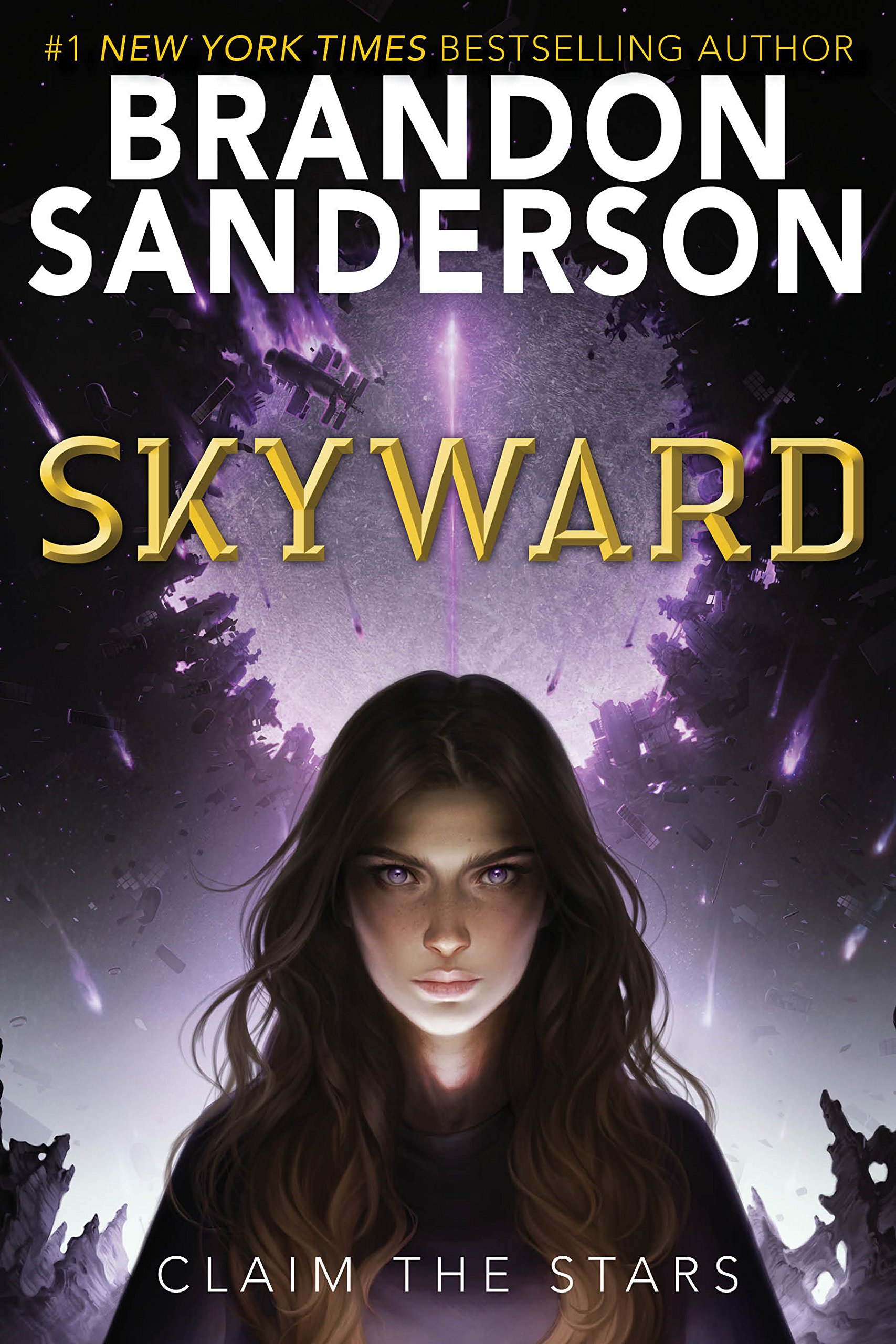
Image result for skyward book cover
Rating: 4 stars
I liked this one a lot! The characters were very intriguing, and I loved the themes in the novel. Read my full review HERE.

11. Elevation by Stephen King
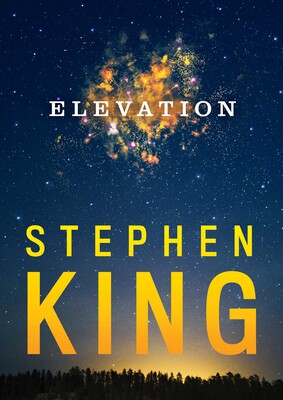
Image result for elevation book cover
Rating: 3 stars
Yes it is a complete coincidence that I read a book called Elevation right after I finished one called Skyward... I agree with the general consensus that the book is miscategorized as a horror. It’s really a contemporary with sci-fi/magical realism elements. I thought the book was fine, just nothing spectacular. The main thing that bothered me was the plausibility of some things. I know a major part of the story was about how Scott looked heavier than he actually was, but why were there so many people in the town blatantly pointing out his weight to his face? That’s just not a thing that happens. Also Deirdre was unrealistically rude. I was rolling my eyes a bit at how overdone her cynicism was.

12. I Know Why the Caged Bird Sings by Maya Angelou
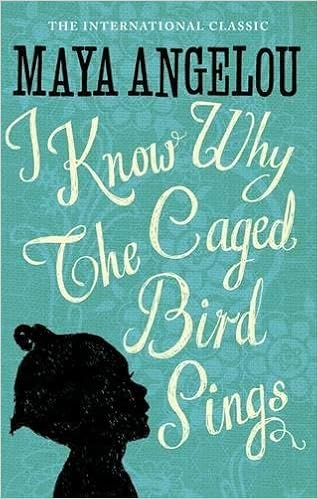
Image result for i know why the caged bird sings book cover
Rating: 4 stars
The amazing thing about this book is that the story itself is not exceedingly remarkable - but the writing, with its lyricism and emotion, is truly spectacular.

13. How to Train Your Dragon by Cressida Cowell
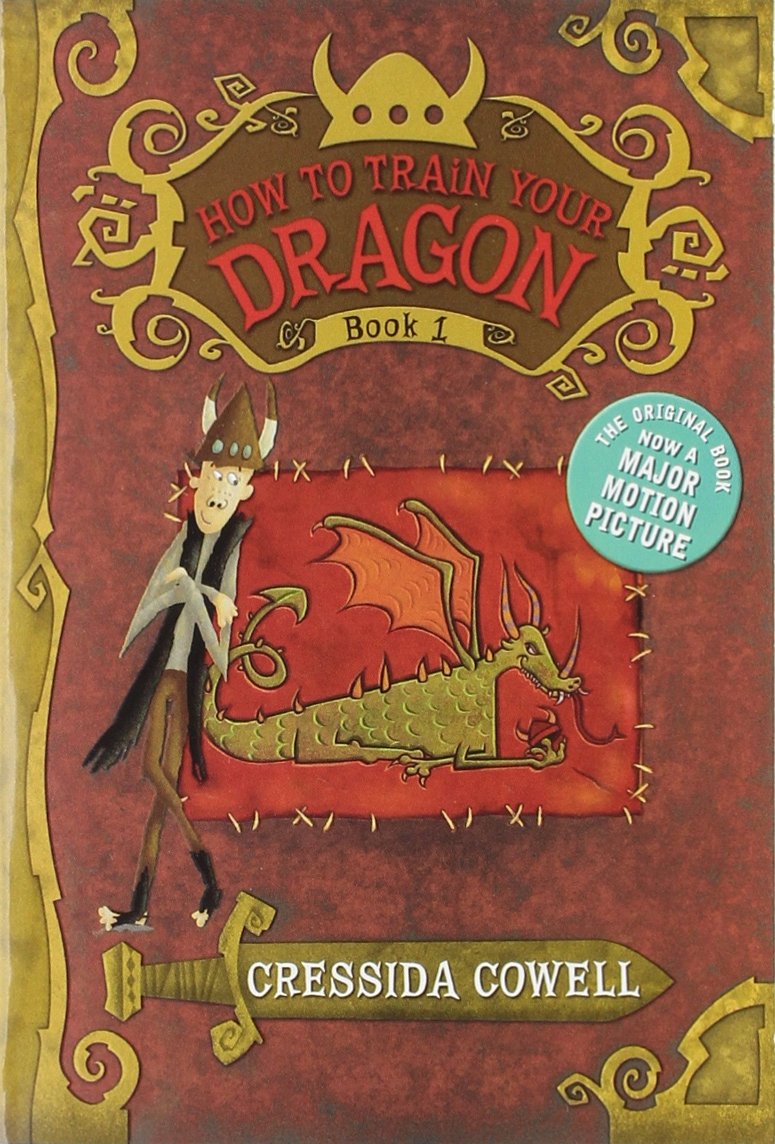
Image result for how to train your dragon book cover
Rating: 2 stars
Disclaimer: HTTYD is my favorite animated film of all time, and among my favorite movies overall.
I think the fact that the movie is spectacular really highlights the missed marks of this book. Obviously, the concept had a lot of potential, and the movie just capitalized on it much better. This is why the movie ended up being so different from the book. As for the book itself, it just didn’t have enough action and high stakes to really be taken seriously. It didn’t captivate, either in plot or characters. The characters are less enthralling and emotive, and the plot doesn’t have a ton of direction. The outcome of the book was anticlimactic, and I don’t really feel any desire to read another book in the series. I think that if I hadn’t watched the movie, or if I’d read the book before I watched the movie, I’d be less harsh with it. Still, I give the book two stars because the world and concept inspired one of my favorite movies ever.

14. You'll Miss Me When I'm Gone by Rachel Lynn Solomon
Image result for you'll miss me when i'm gone book cover
Rating: 2 stars
This book was infuriating. For one thing, I couldn't tell if this was intentional or not, but the protagonists are both insufferable. Adina is clearly much worse than Tovah, but there were lots of moments that I was just shocked at their horribleness, both of them. To learn my very specific reasons for thinking this, check out my full review HERE.

15. What Happened by Hillary Rodham Clinton
Image result for what happened cover
Rating: 4 stars
In trying my best to rate this for the quality of the book, and not my personal opinion of the author, I think that this book was a moving autobiography that blended politics and personal emotion almost seamlessly. I was very moved by this memoir. For my full thoughts, check out my review HERE.


16. Where the Red Fern Grows by Wilson Rawls
Image result for where the red fern grows book cover
Rating: 4 stars
It's fine I'm just crying really hard over this book. I understand why this is considered a classic, and while I'm sure I read this when I was a small child in primary school, I don't know if this should be in school curriculum because why would you break these small children's hearts like that...

17. Noteworthy by Riley Redgate
Image result for noteworthy book cover
Rating: 4 stars
This is a really good book to read if you love diverse contemporaries, and I think that after the popularity of Pitch Perfect, this would make a great film too. Read my full review HERE.

18. One of Us is Lying by Karen M. McManus
Image result for one of us is lying book cover
Rating: 3 stars
So basically... Pretty Little Liars meets Gossip Girl meets Breakfast club.
It’s an interesting twist/mishmash of a bunch of different well known stories, but nothing groundbreaking. Kept me interested enough to keep reading, but never super shocked or invested in the characters.

19. Sleeping Giants by Sylvain Neuvel
Image result for sleeping giants book cover
Rating: 3 stars
Contrary to popular belief, I didn't think this book was groundbreaking in its premise. Some alien life force has left enormous robot pieces across Earth, and the humans are trying to figure it out. It just doesn't seem like a new concept. Also, while sometimes I liked the interview/mission report format of the book, it was also limiting in terms of getting to know the characters and their development, and extremely limiting during action sequences. 3 stars because I can recognize that plot and content of the book was still good, I just probably won't continue with the series.